
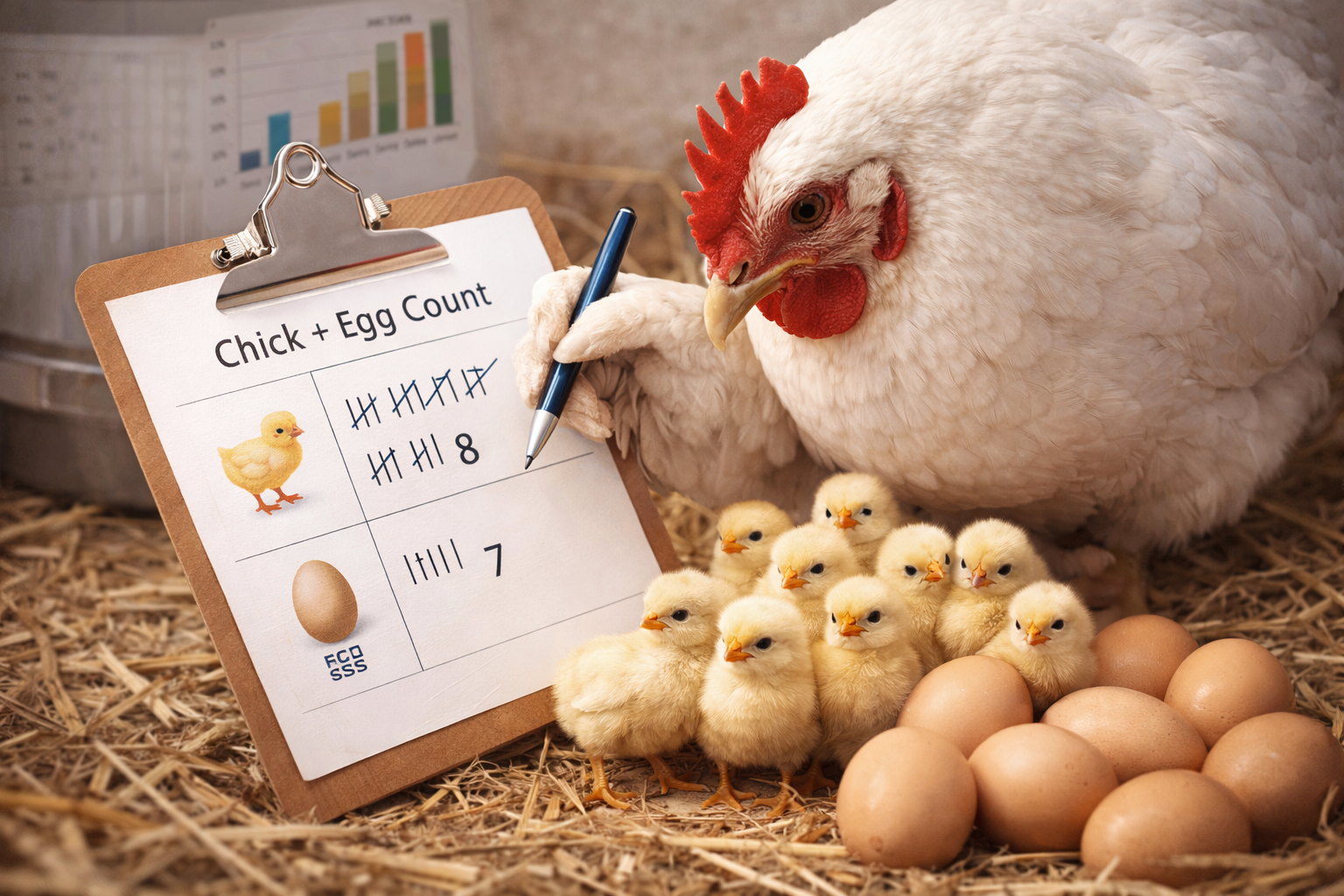
Most backyard chicken keepers begin with a modest plan: three hens, maybe four. It sounds reasonable, manageable, and perfectly aligned with their expectations. Yet within months, that tidy plan often unravels. A few appealing additions, a neighbor’s extra bird, a new breed that’s “too interesting to pass up”—and suddenly the flock is far larger than originally intended.
This lighthearted phenomenon, known as chicken math, is more than a rural anecdote. It captures a pattern that marketing researchers confront every day: consumer behavior expands in ways that stated intent rarely predicts. And understanding that expansion is essential for accurate forecasting and strategic decision‑making.
The Predictable Gap Between Intent and Behavior
Chicken math illustrates a familiar research challenge: people routinely underestimate their future engagement. Survey responses reflect what consumers believe they will do—often conservative, rational, and contained. Real behavior, however, tends to grow once consumers enter a category. For researchers, this gap is not a surprise; it is a recurring, measurable trend that must be accounted for in any robust model.
Post‑Adoption Acceleration
Initial adoption is rarely the end point. It is the beginning of a curve. Whether it’s a first purchase, a trial subscription, or an introductory offer, early participation often leads to increased usage and incremental spending. Chicken math provides a simple metaphor for this acceleration: once the first few hens arrive, the flock expands. In market research, this pattern appears across industries and demographics.
Identity as a Driver of Growth
One of the strongest predictors of long‑term engagement is identity formation. When consumers begin to see themselves as part of a category—“I’m a runner,” “I’m a home chef,” “I’m a DIY person”—their purchasing behavior scales accordingly. Chicken math mirrors this shift. Once someone identifies as a chicken keeper, the flock grows not by accident, but by alignment with a new sense of self.
The Influence of Community
Social reinforcement plays a significant role in shaping behavior. Communities, whether online or offline, encourage deeper participation. Recommendations, shared experiences, and group norms accelerate adoption and increase category depth. Chicken math captures this dynamic in a simple way: chicken owners encourage each other’s expansions. For researchers, these peer effects are essential inputs for understanding real‑world growth.
Non‑Linear Growth in Real‑World Data
The central lesson of chicken math is that behavior rarely scales in a straight line. Emotional drivers, identity shifts, and social influence all contribute to outcomes that exceed early predictions. Effective market research anticipates this non‑linearity, integrating behavioral data and contextual factors rather than relying solely on stated intent.
Closing Thoughts
Chicken math may be a humorous concept, but its implications for marketing research are serious - take it from a marketing researcher and real-life chicken farmer. It reminds us that consumer behavior is dynamic, expanding, and often underestimated at the outset. By recognizing the forces that drive this growth—emotion, identity, and community—researchers can build more accurate forecasts and more resilient strategies.
